 Feb 10–16, 2025
Feb 10–16, 2025
Feb 10–16, 2025
Feb 10–16, 2025
Feb 10–16, 2025
 Feb 9–13, 2026
The Indian Technical and Economic Cooperation (ITEC) program, administered by the Ministry of External Affairs, Government of India, aims to enhance and foster mutual cooperation among developing countries through the sharing of knowledge, expertise, and best practices. The primary objectives of the ITEC courses are to offer training and capacity building in various fields, thereby contributing to the socio-economic development of partner nations. Additionally, the program seeks to promote cultural exchange and strengthen bilateral relationships, paving the way for sustainable development and global cooperation.
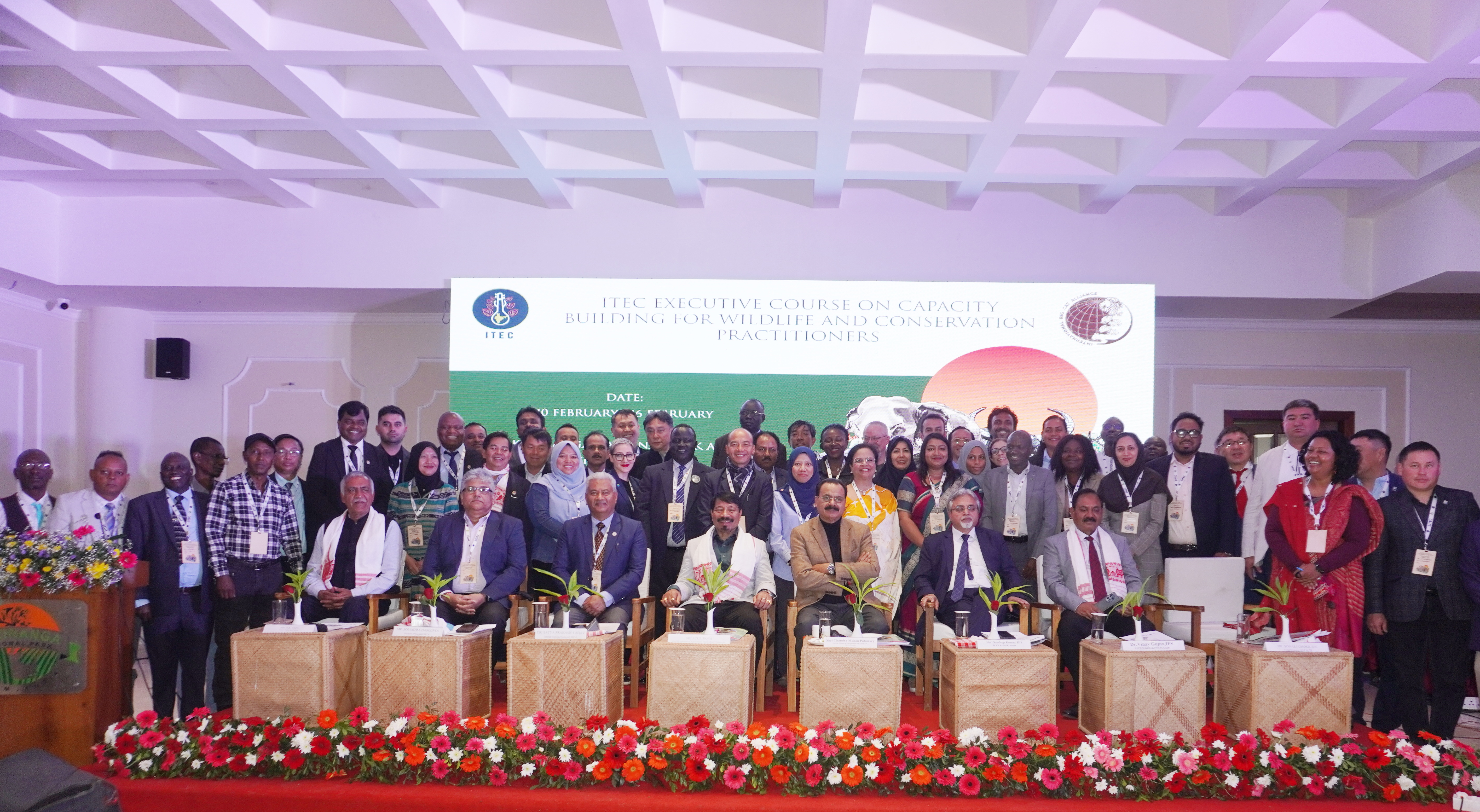
The International Big Cat Alliance, a treaty-based intergovernmental organization, in collaboration with Kaziranga National Park and Tiger Reserve, successfully conducted the ITEC Executive course on Capacity Building for Wildlife and Conservation Practitioners from February 10 to 16, 2025, in Kaziranga. A UNESCO World Heritage Site, Kaziranga is home to the largest population of Greater One-Horned Rhinoceroses and is a critical landscape for tigers, elephants, and diverse birdlife.
The course hosted 44 officials from 27 countries—Armenia, Bangladesh, Bhutan, Cambodia, Eritrea, Eswatini, Ethiopia, Ghana, Guatemala, Indonesia, Iran, Kazakhstan, Kenya, Kyrgyz Republic, Malawi, Malaysia, Maldives, Mauritius, Myanmar, Nicaragua, Niger, Romania, Sierra Leone, South Sudan, Sri Lanka, Tajikistan, and Vietnam. This first-of-its-kind ITEC course conducted entirely inside a Protected Area combined classroom learning with immersive field sessions led by eminent conservationists, covering big cat conservation challenges and solutions across range countries.
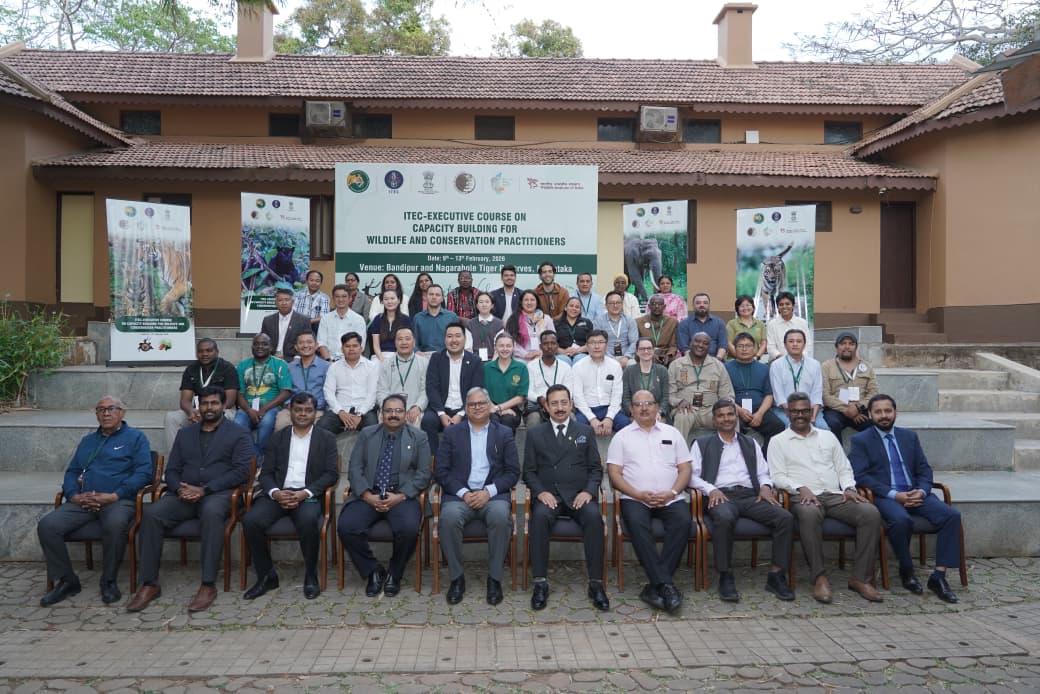
The Indian Technical and Economic Cooperation (ITEC) program, as part of IBCA’s continued pursuit in global wildlife conservation, the 2nd Executive Course on “Capacity Building” for Wildlife and Conservation Practitioners was held from 9–13 February, 2026, in the Bandipur–Nagarhole Landscape, Karnataka. The program kicked off with an inaugural function held on 8th February in Bengaluru.
The Capacity Building programme was conducted by IBCA under the Indian Technical and Economic Cooperation (ITEC) initiative of the Ministry of External Affairs, Government of India, which is a flagship platform for sharing India’s development experience, best practices, and institutional strengths with partner countries of the Global South. Through ITEC, India promotes long-term cooperation, mutual learning, and people-to-people linkages across diverse sectors, including environment and biodiversity conservation.
The course brought together 38 participants from 22 countries—Armenia, Bhutan, Cambodia, Guatemala, Kazakhstan, Kenya, Kyrgyzstan, Liberia, Malawi, Malaysia, Mali, Mexico, Mongolia, Myanmar, Nepal, Niger, Panama, Peru, Romania, Russia, Somalia, and Sri Lanka.
Through thematic lectures, interactive sessions, case studies, and field demonstrations, the participants were introduced to the institutional and legal frameworks guiding wildlife management in India. Some of the sessions included:
Special emphasis was placed on big cat conservation within the broader landscape approach, highlighting habitat connectivity, corridor development, scientific monitoring, anti-poaching mechanisms, intelligence-led enforcement, and the role of technology such as camera trapping, drones, GIS mapping, and AI-based surveillance systems.
The field visits at Bandipur–Nagarhole landscapes provided practical exposure to protected area management practices such as habitat management, wildlife monitoring, fire line maintenance, human–wildlife conflict mitigation measures, captive elephant management, and ex-situ conservation. The delegates also visited the training unit of wildlife sniffer dog squad and an anti-poaching camp, gaining insight into frontline patrolling strategies and field-level interventions undertaken by the Forest Department.
The valedictory function of the course was held on 13 February 2026 at Nagarhole Tiger Reserve.